Since my entry into the professional world and with the enthusiasm of investing in Quisqueya, several indicators have shown me the Dominican Republic as a society with solid development and a steadily growing economy.
I base this statement on the following indicators, and it is strictly my personal opinion. It relates to the political landscape and to indicators derived from quantifiable public data issued by various international organizations such as the World Bank and the International Monetary Fund, as well as risk rating agencies and government institutions of the Dominican Republic such as the Central Bank. These organizations have also recognized the need to implement a poverty-reduction program.
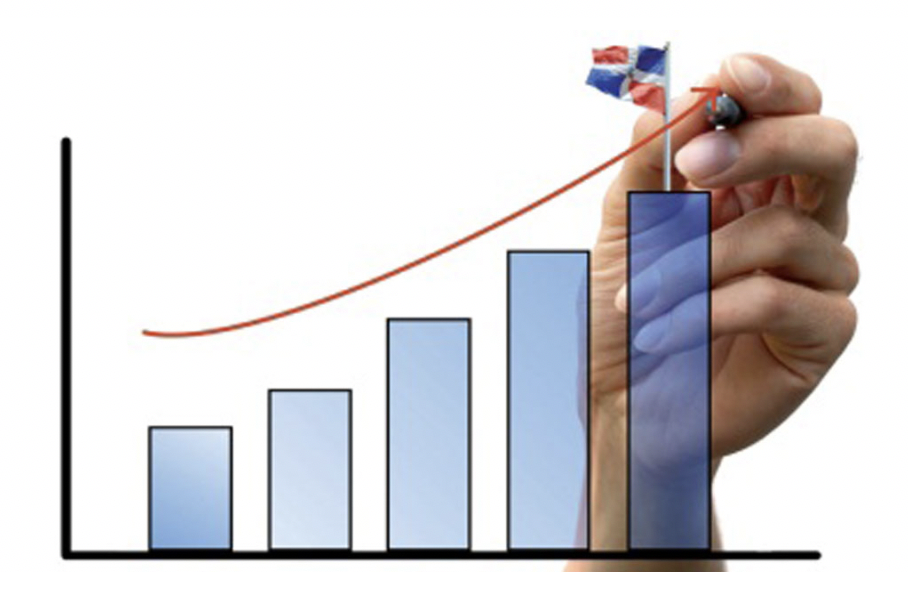
The following data reaffirm today that we are moving in the right direction toward sustained socioeconomic development.
• To date, relevant data—such as the fact that Banco Popular Dominicano continues its upward trend in the ranking of the British magazine The Banker, which lists the world’s top 1,000 banks—materializes in the global economic landscape, showcasing the bank’s size, solvency, and financial performance.
It reached position 799 in the latest edition, an improvement of 8 spots compared to last year.
In the last four years, Popular has climbed more than 100 places in this ranking.
• Trade between China and the Dominican Republic reached US $1.4 billion in the first six months, a jump of 44.1%. Confidence in the country’s political stability suggests that trade relations will continue developing at a significant pace.
It is obviously up to the Dominican side to boost exports of products demanded by the Asian giant that the DR can competitively supply in price, quality, and delivery times, in addition to the possibility of attracting tourists to this region, which is an ideal site for multiple connections.
• The Minister of Agriculture, Osmar Benítez, announced his commitment to increasing the promotion of Organic Agriculture in the Dominican Republic, better known as “organic farming,” in accordance with market rules and regulations. In the DR, the organic market represents more than US $500 million in exports, with bananas and cocoa being the largest items, according to the Organic Department of the Ministry of Agriculture.
• The cement industry in the Dominican Republic is aiming this year for a per-capita cement consumption of around 480 kilos per inhabitant, positioning the country among the highest in the entire American continent.
The country has become the location with the greatest cement production capacity per capita in the Americas, surpassing large producers like Mexico, Brazil, and Colombia.
• The Central Bank (BC) reported that the Consumer Price Index (CPI) for August of this year registered a monthly variation of 0.34% compared to July, placing the accumulated inflation of the first eight months of the year at 1.99%.
The report indicates that year-on-year inflation, measured from August 2018 to August 2019, stood at 1.72%, remaining below the lower limit of the target range of 4.0% ± 1.0% established in the Monetary Program.
These facts, analyzed as an overview of the country—along with other topics that will be considered in future notes—allow me to affirm what the title of this article states.
Edward De Valle II
Managing Partner & CEO
Profusion Group